
REST API vs GraphQL: Key Differences and Use Cases
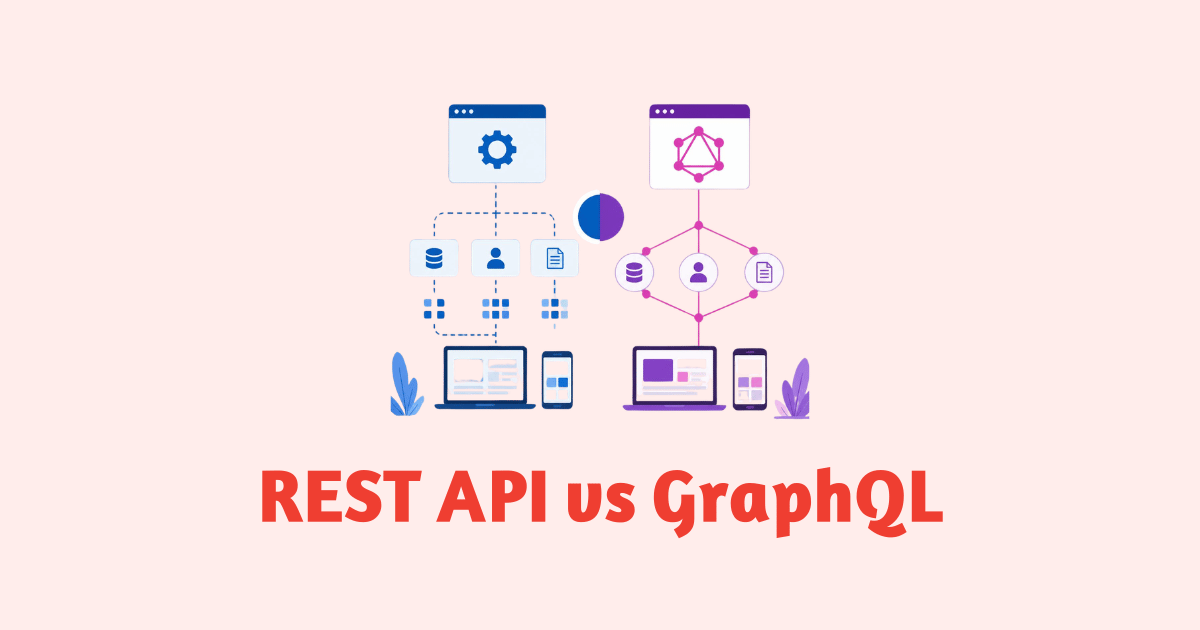
When building modern web or mobile applications, choosing the right API architecture is a critical decision. REST API vs GraphQL is a common dilemma that developers face. REST has been the dominant standard for over a decade, while GraphQL has rapidly gained popularity for its flexibility and efficiency. This article breaks down the differences, strengths, and weaknesses of each approach, helping you make an informed choice for your next project.
Key Takeaways
- REST uses fixed endpoints and HTTP verbs; GraphQL uses a single endpoint and a query language.
- GraphQL solves over-fetching and under-fetching but adds complexity and performance overhead.
- REST benefits from HTTP caching and mature tooling; GraphQL requires custom caching strategies.
- Choose REST for simple, cacheable, resource-oriented APIs; choose GraphQL for complex, data-driven UIs with evolving requirements.
- Both can coexist: many teams use REST for public APIs and GraphQL for internal frontend-backend communication.
What is a REST API?
REST stands for Representational State Transfer, an architectural style defined by Roy Fielding in 2000. A REST API exposes resources via URLs and uses standard HTTP methods to perform operations. Key principles include statelessness, client-server separation, cacheability, and a uniform interface.
In a REST API, each resource is identified by a URL. For example, /users represents a collection of users, and /users/123 represents a single user. The client interacts using HTTP verbs: GET (retrieve), POST (create), PUT (update), PATCH (partial update), DELETE (remove).
Here's a simple REST endpoint built with Express.js that returns a user by ID:
const express = require('express');
const app = express();

app.get('/api/users/:id', (req, res) => {
  const user = getUserById(req.params.id);
  if (!user) return res.status(404).json({ error: 'User not found' });
  res.json(user);
});

app.listen(3000, () => console.log('REST API running on port 3000'));
When a client sends GET /api/users/123, the server returns the full user object as JSON or a 404 error. The response is predetermined by the server, not the client.
What is GraphQL?
GraphQL is a query language and runtime for APIs, developed by Facebook in 2012 and open-sourced in 2015. Unlike REST, GraphQL exposes a single endpoint (usually /graphql) and lets clients specify exactly what data they need in a single request.
A GraphQL API is defined by a schema that describes types, queries, mutations, and subscriptions. The schema acts as a contract between client and server. Clients send queries that mirror the shape of the response they want.
Here's a GraphQL schema definition for a user and their posts:
type User {
  id: ID!
  name: String!
  email: String!
  posts: [Post!]!
}

type Post {
  id: ID!
  title: String!
  content: String!
}

type Query {
  user(id: ID!): User
  users: [User!]!
}
And here's a query that fetches a user's name, email, and post titles:
query {
  user(id: "123") {
    name
    email
    posts {
      title
    }
  }
}
The server responds with exactly the requested fields, no more, no less. This eliminates over-fetching and under-fetching, which are common in REST.
Core Differences Between REST API and GraphQL
Understanding the fundamental differences helps you evaluate which API style fits your project. Here are the key contrasts:
- Endpoints: REST uses multiple endpoints for different resources; GraphQL uses a single endpoint for all operations.
- Data Fetching: REST returns fixed data structures; GraphQL lets clients request exactly what they need.
- Over-fetching / Under-fetching: REST often causes over-fetching (extra data) or under-fetching (multiple requests); GraphQL eliminates both.
- Versioning: REST typically versions via URL (
/v1/users); GraphQL evolves the schema with deprecation, avoiding versioned endpoints. - Caching: REST leverages built-in HTTP caching (ETags, Cache-Control); GraphQL requires custom caching strategies.
- Error Handling: REST uses HTTP status codes (200, 404, 500); GraphQL always returns 200 with an errors array in the response.
- Tooling & Ecosystem: REST has mature tools (Swagger, Postman); GraphQL has a growing ecosystem (Apollo, GraphiQL).
- Learning Curve: REST is simpler to grasp; GraphQL requires understanding schemas, resolvers, and query language.
Data Fetching and Efficiency: REST vs GraphQL
Efficiency is a major factor when comparing REST and GraphQL. REST's fixed responses often lead to over-fetching or under-fetching, while GraphQL's client-driven queries optimize data transfer.
Consider a mobile app that displays a user's name and the titles of their posts. With REST, you might need two requests:
GET /api/users/123
GET /api/users/123/posts
Each request returns full objects, including fields you don't need. With GraphQL, one request fetches exactly the required fields:
query {
  user(id: "123") {
    name
    posts {
      title
    }
  }
}
This reduces network round trips and payload size, which is especially beneficial for mobile networks. However, GraphQL's flexibility can lead to complex queries that strain the server if not managed properly.
The N+1 problem is a common performance pitfall in GraphQL. If a query requests a list of users and their posts, a naive resolver might execute one query for users and then one query per user for posts. DataLoader solves this by batching and caching database calls.
const DataLoader = require('dataloader');

const userLoader = new DataLoader(async (userIds) => {
  const users = await db.users.find({ id: { $in: userIds } });
  return userIds.map(id => users.find(user => user.id === id));
});

// In resolver
const user = await userLoader.load(parent.userId);
DataLoader batches all user ID requests into a single database query, drastically improving performance. REST avoids N+1 by design because each endpoint maps to a specific resource, but it may require multiple requests for related data.
Real-World Use Cases for REST and GraphQL
Both REST and GraphQL shine in different scenarios. Understanding typical use cases helps you choose wisely.
When to Use REST
- Public APIs: REST is simple, well-understood, and easy to consume by any client.
- Microservices: Stateless REST endpoints fit naturally into microservice architectures.
- File Uploads/Downloads: REST handles binary data efficiently with multipart requests.
- Caching-Heavy Applications: HTTP caching layers (CDNs, proxies) work seamlessly with REST.
- Simple CRUD: Basic create, read, update, delete operations are straightforward in REST.
When to Use GraphQL
- Complex Frontends: Applications with many nested data requirements benefit from GraphQL's single request.
- Mobile Apps: Reduced payload size and fewer network calls improve mobile performance.
- Rapidly Evolving APIs: Adding fields without versioning accelerates iteration.
- Data Aggregation: GraphQL can stitch multiple REST or database sources into one API.
- Real-Time Updates: Subscriptions provide real-time data push capabilities.
Real-world examples: GitHub offers both REST and GraphQL APIs, letting developers choose. Shopify uses GraphQL for its Storefront API to give clients precise control. Netflix uses GraphQL for federated data access across microservices.
Performance Considerations: REST vs GraphQL
Performance is not a clear win for either style; it depends on the use case and implementation. REST benefits from HTTP caching and statelessness, while GraphQL optimizes data fetching but introduces new challenges.
REST Performance Factors
- HTTP Caching: GET responses can be cached by browsers, CDNs, and proxies using Cache-Control and ETags.
- Statelessness: Each request is independent, making horizontal scaling straightforward.
- Over-fetching: Larger payloads consume more bandwidth and processing power.
- Multiple Round Trips: Under-fetching requires additional requests, increasing latency.
GraphQL Performance Factors
- Single Request: Reduces network overhead by fetching all needed data at once.
- Query Complexity: Deeply nested queries can be expensive; implement depth limiting and complexity analysis.
- N+1 Problem: Use DataLoader or similar batching tools to avoid multiple database calls.
- Caching Complexity: No built-in HTTP caching; use persisted queries, Apollo Cache, or CDN edge caching.
- Payload Size: Clients control the response size, but malicious queries can request huge amounts of data.
To optimize GraphQL performance, consider persisted queries. Instead of sending the full query text, the client sends a hash that the server maps to a stored query. This reduces request size and prevents malicious queries.
// Server-side persisted query example (Apollo Server)
const server = new ApolloServer({
  persistedQueries: {
    cache: new InMemoryLRUCache(),
  },
});
Persisted queries also improve security by only allowing pre-approved queries.
Security Considerations for REST and GraphQL
Security is paramount for any API. Both REST and GraphQL have unique attack surfaces that require attention.
REST Security Best Practices
- HTTPS: Always encrypt data in transit.
- Authentication: Use OAuth 2.0, JWT, or API keys.
- Authorization: Enforce access control at the endpoint level.
- Rate Limiting: Protect against brute force and DDoS attacks.
- Input Validation: Sanitize inputs to prevent injection attacks.
- Error Handling: Avoid exposing sensitive information in error messages.
GraphQL Security Best Practices
- Depth Limiting: Prevent deeply nested queries that can exhaust resources.
- Query Complexity Analysis: Assign costs to fields and reject expensive queries.
- Disable Introspection: In production, disable introspection to hide schema details.
- Rate Limiting: Limit by query complexity, not just request count.
- Authorization in Resolvers: Check permissions for each field or type.
- Persisted Queries: Only allow pre-approved queries to run.
- Avoid Batching Attacks: Limit the number of operations per request.
Common vulnerabilities like SQL injection, broken access control, and excessive data exposure affect both styles. GraphQL's single endpoint can be a single point of failure, so robust monitoring and logging are essential.
Common Mistakes When Choosing Between REST and GraphQL
Developers often make assumptions that lead to suboptimal choices. Avoid these pitfalls:
- Assuming GraphQL is always faster: Without proper optimization, GraphQL can be slower than REST.
- Ignoring caching implications: REST's HTTP caching is a huge advantage; GraphQL requires extra work.
- Not planning for N+1: GraphQL resolvers can cause performance bottlenecks if not batched.
- Over-engineering with GraphQL: Simple CRUD APIs may not need GraphQL's complexity.
- Underestimating the learning curve: GraphQL requires new tooling and mental models.
- Poor REST versioning: Breaking changes without versioning frustrate clients.
- Exposing all fields in GraphQL: Without field-level authorization, sensitive data leaks.
- Neglecting rate limiting: Both APIs need protection against abuse.
- Mixing paradigms without clear boundaries: Inconsistent API design confuses consumers.
Best Practices for REST API Design
Follow these guidelines to build robust, maintainable REST APIs:
- Use nouns for resources:
/usersnot/getUsers. - Use HTTP methods correctly: GET for retrieval, POST for creation, PUT for full updates, PATCH for partial, DELETE for removal.
- Use plural nouns:
/usersinstead of/user. - Return appropriate status codes: 200 OK, 201 Created, 400 Bad Request, 404 Not Found, 500 Internal Server Error.
- Version your API: Use URL versioning (
/v1/users) or custom headers. - Support filtering, sorting, and pagination: Use query parameters like
?sort=name&page=2. - Use HATEOAS for discoverability: Include links to related resources (optional but powerful).
- Document with OpenAPI/Swagger: Provide interactive documentation.
- Implement caching headers: Use
Cache-Control,ETag,Last-Modified. - Secure with OAuth2 and HTTPS: Never send credentials over plain HTTP.
Best Practices for GraphQL API Design
Designing a GraphQL API requires a different mindset. Here are essential best practices:
- Design schema around client needs: Model types based on UI requirements, not database tables.
- Use descriptive names: Fields should be self-explanatory, e.g.,
createdAtnotcd. - Implement pagination: Use Relay-style connections with cursors for scalable lists.
- Batch and cache with DataLoader: Solve N+1 queries efficiently.
- Limit query depth and complexity: Protect against malicious queries.
- Use persisted queries in production: Reduce attack surface and improve performance.
- Handle errors consistently: Return errors in the
errorsarray with meaningful codes. - Version via deprecation: Add new fields and deprecate old ones instead of breaking changes.
- Document with SDL and tools: Use GraphiQL, Apollo Sandbox, or GraphQL Voyager.
- Secure resolvers: Implement authorization logic at the field or type level.
How to Choose Between REST and GraphQL
Choosing the right API style depends on your project's specific requirements. Use this decision framework:
- Analyze data fetching patterns: If clients need varied, nested data, GraphQL excels. If data is simple and resource-oriented, REST is sufficient.
- Consider caching needs: If HTTP caching is critical, REST has the advantage.
- Evaluate real-time requirements: GraphQL subscriptions offer real-time capabilities; REST requires polling or webhooks.
- Assess team expertise: GraphQL has a steeper learning curve; ensure your team is ready.
- Review existing infrastructure: If you already have REST APIs, a GraphQL gateway can aggregate them.
- Prototype both: Build a small prototype to compare developer experience and performance.
- Consider a hybrid approach: Use REST for public APIs and GraphQL for internal frontend-backend communication.
There is no one-size-fits-all answer. Many successful companies use both paradigms where they make sense.
Migrating from REST to GraphQL: Challenges and Strategies
Migrating an existing REST API to GraphQL is a significant undertaking. Instead of a big-bang rewrite, consider an incremental approach.
Strategies for Migration
- GraphQL Gateway: Wrap existing REST APIs with a GraphQL layer using tools like Apollo Federation or Hasura.
- Strangler Pattern: Gradually replace REST endpoints with GraphQL resolvers while both run in parallel.
- Team Training: Invest in GraphQL training and tooling before migration.
- Performance Monitoring: Track query performance and optimize resolvers.
- Client Migration: Update frontend clients to use GraphQL incrementally, feature by feature.
Here's an example of a GraphQL resolver that calls an existing REST endpoint:
const resolvers = {
  Query: {
    user: async (_, { id }) => {
      const response = await fetch(`https://api.example.com/users/${id}`);
      return response.json();
    },
  },
};
This approach lets you leverage existing REST services while building a GraphQL facade. Over time, you can replace the REST calls with direct database access or microservice calls.
REST vs GraphQL: A Side-by-Side Comparison
To summarize the key contrasts, here's a side-by-side comparison:
- Endpoint: REST – multiple; GraphQL – single.
- Data Fetching: REST – server-defined; GraphQL – client-defined.
- Over-fetching: REST – common; GraphQL – rare.
- Under-fetching: REST – common (multiple requests); GraphQL – rare (single request).
- Versioning: REST – URL versioning; GraphQL – schema evolution.
- Caching: REST – HTTP caching; GraphQL – custom caching.
- Error Handling: REST – HTTP status codes; GraphQL – errors array.
- Learning Curve: REST – low; GraphQL – moderate to high.
- Tooling: REST – mature; GraphQL – growing.
- Real-time: REST – polling/webhooks; GraphQL – subscriptions.
- File Uploads: REST – native; GraphQL – limited.
- Security: REST – per-endpoint; GraphQL – per-field.
GraphQL Subscriptions vs REST Webhooks for Real-Time Data
Real-time functionality is a common requirement. REST typically uses polling or webhooks, while GraphQL offers subscriptions.
REST Polling and Webhooks
Polling involves the client repeatedly asking the server for updates. This is simple but inefficient, generating unnecessary requests. Webhooks reverse the flow: the server sends a POST request to a client-provided URL when an event occurs. Webhooks are efficient but require the client to expose an endpoint and handle retries.
GraphQL Subscriptions
GraphQL subscriptions maintain a persistent connection (usually WebSocket) between client and server. The client subscribes to specific events, and the server pushes data when those events occur. This provides real-time updates without polling.
subscription {
  postAdded {
    id
    title
    author {
      name
    }
  }
}
The server pushes new posts to all subscribed clients. Subscriptions are powerful for chat apps, live feeds, and collaborative tools. However, they add complexity: you need to manage connections, scale WebSocket servers, and handle authentication over persistent connections.
Tooling and Ecosystem: REST vs GraphQL
The tooling around an API style can significantly impact developer productivity. REST has a mature ecosystem, while GraphQL's is rapidly evolving.
REST Tooling
- Documentation: OpenAPI (Swagger), RAML, API Blueprint.
- Testing: Postman, Insomnia, curl.
- Client Libraries: Auto-generated SDKs from OpenAPI specs.
- Monitoring: New Relic, Datadog, AWS CloudWatch.
- Caching: Varnish, Nginx, CDN integration.
GraphQL Tooling
- Servers: Apollo Server, GraphQL Yoga, Hasura, AWS AppSync.
- Clients: Apollo Client, Relay, urql.
- IDEs: GraphiQL, Apollo Sandbox, GraphQL Playground.
- Code Generation: GraphQL Code Generator.
- Monitoring: Apollo Studio, GraphQL Inspector.
- Caching: Apollo Cache, Relay Store, DataLoader.
REST's tooling is battle-tested and widely supported. GraphQL's tooling is powerful but may require more configuration. For example, setting up persisted queries and caching requires additional effort.
Adoption and Community Support
REST has been the de facto standard for web APIs for over two decades. It is used by virtually every major tech company, from Google to Amazon. The community is vast, and solutions to common problems are well-documented.
GraphQL, since its open-source release in 2015, has seen explosive growth. It is used by Facebook, GitHub, Shopify, Netflix, and many others. The community is active, with regular conferences (GraphQL Summit) and a thriving open-source ecosystem.
However, GraphQL adoption is still lower than REST. Some enterprises are hesitant due to security concerns and the need for retraining. REST's ubiquity means you can find developers with REST experience easily; GraphQL expertise is less common.
Cost of Implementation and Maintenance
Both API styles have associated costs, but they differ in where the effort is spent.
REST Costs
- Development: Lower initial cost due to simplicity.
- Maintenance: Versioning and multiple endpoints can increase maintenance overhead.
- Scaling: Statelessness makes scaling straightforward, but over-fetching increases bandwidth costs.
- Training: Minimal, as most developers know REST.
GraphQL Costs
- Development: Higher initial cost due to schema design and resolver implementation.
- Maintenance: Schema evolution is easier, but resolver logic can become complex.
- Scaling: Requires careful performance tuning (caching, batching, query limits).
- Training: Significant investment in teaching GraphQL concepts and tooling.
For small projects, REST is often more cost-effective. For large, complex applications, GraphQL's benefits can outweigh the initial investment.
Common REST and GraphQL Anti-Patterns
Avoid these anti-patterns to keep your APIs maintainable and performant.
REST Anti-Patterns
- Using verbs in URLs:
/getUsersinstead of/users. - Ignoring HTTP status codes: Returning 200 for errors.
- Deeply nested resources:
/users/123/posts/456/comments/789becomes unwieldy. - No versioning: Breaking changes without warning.
- Chatty APIs: Requiring many requests to render a single view.
GraphQL Anti-Patterns
- Exposing database schema directly: Leaking internal structure.
- No query depth limiting: Allowing malicious deep queries.
- N+1 queries: Not using DataLoader or batching.
- Over-fetching in resolvers: Fetching full objects when only IDs are needed.
- Ignoring error handling: Returning generic errors without codes.
Both styles benefit from consistent naming conventions, thorough documentation, and automated testing.
How GraphQL Resolvers Work
Resolvers are functions that populate the data for each field in a GraphQL schema. When a query arrives, the GraphQL server executes resolvers for each requested field.
const resolvers = {
  Query: {
    user: (parent, args, context, info) => {
      return context.db.User.findByPk(args.id);
    },
  },
  User: {
    posts: (parent, args, context) => {
      return context.db.Post.findAll({ where: { userId: parent.id } });
    },
  },
};
The root resolver for user fetches a user by ID. The User.posts resolver fetches posts for that user. Without batching, this can lead to N+1 queries. DataLoader is typically used to batch and cache these calls.
Resolvers receive four arguments: parent (the previous object), args (query arguments), context (shared state like authentication), and info (query metadata). Understanding these helps you write efficient resolvers.
REST API Versioning Strategies
Versioning is crucial for evolving REST APIs without breaking existing clients. Common strategies include:
- URI Versioning:
/v1/users– simple and explicit, but pollutes the URL space. - Query Parameter Versioning:
/users?version=1– easy to implement, but can be overlooked. - Header Versioning:
Accept: application/vnd.myapi.v1+json– clean URLs, but less visible. - Custom Header:
X-API-Version: 1– straightforward, but non-standard.
Regardless of method, document versioning clearly and maintain backward compatibility for a reasonable period. GraphQL avoids versioning by deprecating fields and adding new ones, but breaking changes are still possible if you remove fields without warning.
GraphQL Schema Design Principles
A well-designed GraphQL schema is intuitive, scalable, and secure. Follow these principles:
- Think in graphs, not endpoints: Model relationships between types.
- Use nullable fields carefully: Non-null fields (
!) enforce data presence but can break clients if a value is missing. - Design for pagination: Use connections with cursors for lists that can grow.
- Separate input types for mutations: Use
inputtypes to decouple from output types. - Implement interfaces for shared fields: Reuse common fields across types.
- Use enums for fixed sets of values: Improves type safety and documentation.
- Consider Relay compliance: If using Relay, follow its specifications for connections and mutations.
Frequently Asked Questions About REST API vs GraphQL
Is GraphQL faster than REST?
Not necessarily. GraphQL can reduce payload size and round trips, but complex queries can be slower. REST benefits from HTTP caching. Performance depends on implementation and use case.
Can I use REST and GraphQL together?
Yes. Many teams expose REST for public APIs and GraphQL for internal frontend needs. A GraphQL gateway can aggregate REST services, providing a unified GraphQL endpoint.
Which is better for mobile apps?
GraphQL often shines on mobile due to reduced data transfer and fewer requests. However, REST with proper caching and pagination can also work well, especially for simple data models.
Does GraphQL replace REST?
No. Both have strengths. GraphQL is not a replacement but an alternative for specific use cases. REST remains dominant for public APIs and simple resource-oriented services.
What about file uploads in GraphQL?
GraphQL doesn't natively handle file uploads well. REST or separate upload endpoints are often used. Some GraphQL implementations support multipart uploads, but it's less standardized.
How does GraphQL handle versioning?
GraphQL typically evolves by adding new fields and deprecating old ones, avoiding versioned endpoints. Clients specify fields, so backward compatibility is easier to maintain.
Is GraphQL more secure than REST?
Neither is inherently more secure. GraphQL introduces new attack vectors like complex queries and introspection. Both require proper authentication, authorization, rate limiting, and input validation.
Final Thoughts and Actionable Next Steps
Choosing between REST and GraphQL is not about picking a winner—it's about matching the right tool to your project's needs. REST excels in simplicity, caching, and public APIs. GraphQL shines in complex, data-driven frontends and rapid iteration.
Here are actionable steps to move forward:
- Evaluate your data requirements: List the data fetching patterns of your clients.
- Prototype a small feature: Build a minimal REST and GraphQL version to compare.
- Consider a hybrid approach: Use REST for public endpoints and GraphQL for internal aggregation.
- Invest in tooling: For GraphQL, adopt Apollo, DataLoader, and persisted queries. For REST, use OpenAPI and caching layers.
- Monitor performance: Set up logging and metrics to identify bottlenecks.
- Secure your API: Implement authentication, authorization, and rate limiting regardless of style.
- Document thoroughly: Provide clear documentation for both internal and external consumers.
By understanding the nuances of REST API vs GraphQL, you can architect a system that is efficient, maintainable, and scalable for years to come.